Wednesday, April 11, 2012

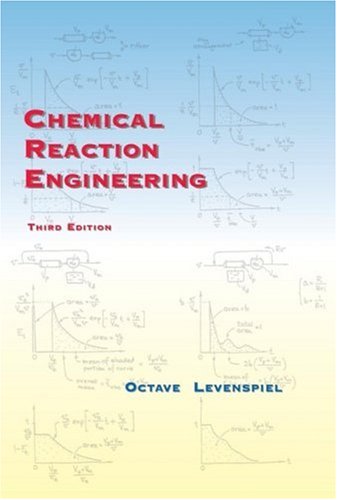
Chemical Reaction Engineering, 3rd Edition by Octave Levenspiel


Chemical Reaction Engineering, 3rd Edition by Octave Levenspiel
Publisher: Wiley | 3rd edition (August 13, 1998) | ISBN: 047125424X | Pages: 688 | PDF | 13.67 MB

Chemical reaction engineering is concerned with the exploitation of chemical reactions on a commercial scale. Its goal is the successful design and operation of chemical reactors. This text emphasizes qualitative arguments, simple design methods, graphical procedures, and frequent comparison of capabilities of the major reactor types. Simple ideas are treated first, and are then extended to the more complex.

An improved and simplified edition of this classic introduction to the principles of reactor design for chemical reactions of all types--homogeneous, catalytic, biochemical, gas, solid, extractive, etc. Adds new material on systems of deactivating catalysts, flow modeling and diagnosis of the ills of operating equipment, and new simple design procedures for packed bed and fluidized bed reactors.

Download Link:
                             4Shared (14.1 MB) or Uploading (13.7 MB) or 4Shared (14.1 MB)


Tuesday, April 10, 2012

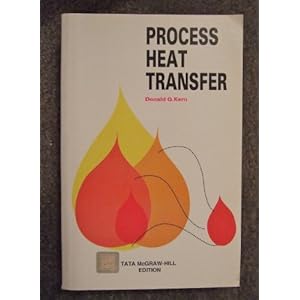
Process Heat Transfer, By Kern D. Q.


Process Heat Transfer, By Kern D. Q.
McGraw-Hill | 21st printing 1983| ISBN-10: 0070853533| Format: PDF|Pages: 878|Size: 28.1 MB

Book Description:
This book is designed to provide fundamental instruction in heat transfer while employing the methods and language of industry.

Key Features:
Provides the rounded group of heat-transfer tools required in process engineering it has been necessary to present a number of empirical calculation methods which have not previously appeared in the engineering literature.
Considerable through has been given to these methods, and the author has discussed them with numerous engineers before accepting and including them in the text.

CONTENTS
Preface
Index to the Principal Apparatus Calculations
Chapter 01: Process Heat Transfer
Chapter 02: Conduction
Chapter 03: Convection
Chapter 04: Radiation
Chapter 05: Temperature
Chapter 06: Counterflow: Double-pipe Exchangers
Chapter 07: 1-2 Parallel-Counterflow: Shell-And-Tube Exchangers
Chapter 08: Flow Arrangements for Increased Heat Recovery
Chapter 09: Gases
Chapter 10: Streamline Flow and Free Convection
Chapter 11: Calculations for Process Conditions
Chapter 12: Condensation of Single Vapors
Chapter 13: Condensation of Mixed Vapors
Chapter 14: Evaporation
Chapter 15: Vaporizers, Evaporators, and Reboilers
Chapter 16: Extended Surfaces
Chapter 17: Direct-Contact Transfer: Cooling Towers
Chapter 18: Batch and Unsteady-State Processes
Chapter 19: Furnace Calculations
Chapter 20: Additional Applications
Chapter 21: The Control of Temperature and Related Process Variables
Appendix of Calculation Data
Author Index
Subject Index

Download Link:
                                               4Shared (28.1 MB)

For Hardcopy:


Handbook of Industrial Chemistry: Organic Chemicals


M. Ali, Bassam Ali, "Handbook of Industrial Chemistry: Organic Chemicals" McGraw-Hill Professional 2004 | ISBN-10: 0071410376 | 628 Pages | PDF | 26 Mb


Book Description
The definitive guide for the general chemical analyses of non-petroleum based organic products such as paints, dyes, oils, fats, and waxes.
* Chemical tables, formulas, and equations.
* Covers all of the chemical processes which utilize organic chemicals.
* Physical properties for the most common organic chemicals.
Contents:
Safety Considerations in Process Industries, Industrial Pollution Prevention and Waste Management, Edible Oils, Fats, and Waxes, Soaps and Detergents, Sugar and Other Sweeteners, Paints, Pigments, and Industrial Coatings, Dyestuffs, Finishing and Dyeing of Textiles, Industrial Fermentation, Pharmaceutical Industry, Agrochemicals, Chemical Explosives, Petroleum Processing and Petrochemicals, Polymers and Plastics.

Download Links:
                                                        Dropbox (8.06 MB)

Buy your hardcopy from here:


Sunday, April 8, 2012

Separation Process Principles 2nd Edition, Seader & Henley


Separation Process Principles 2nd Edition, J. D. Seader, Ernest J. Henley
Wiley | 2005 | ISBN: 0471464805 | 800 pages | RAR | 31.61 MB

The latest principles, processes, and practices
Chemical engineering design is in a constant state of flux. From advances in the practice of separation operations in chemical engineering to corresponding changes in the curriculum, much has happened in the seven years since the publication of Seader and Henley's first edition of Separation Process Principles, including: 
(1) advances in the fundamentals of mass, heat, and momentum transport, 
(2) wide availability of computer programs to facilitate the application of mathematical models to a wide range of separation operations, 
(3) increasing interest in separations involving the solid phase, and
(4) changes in the practice of chemical engineering to emphasize product design as well as process design. This second edition reflects these changes.
Highlights of the second edition:
Chapter on crystallization, including thermodynamic and transport aspects, the MSMPR crystallizer model, and treatments of screen analysis, desublimation, and evaporation
Chapter on drying of solids, including treatments of psychrometry and several dryer mathematical models
Chapter on leaching of solids, including a discussion of the espresso machine
Substantial new sections on ultrafiltration and microfiltration, including detailed examples
Added section on simulated-moving-bed adsorption, including detailed examples
Expansion of the treatment of batch distillation to include optimal control
New sections on hybrid systems and membrane cascades
Now includes 214 examples and 649 homework exercises

Download Link:
                                  Ifile (31.61 MB)   or   Uploading (31.8 MB)


Wednesday, April 4, 2012

Ideas of Quantum Chemistry, Lucjan Piela


Ideas of Quantum Chemistry
Publisher: Elsevier Science | 2007 | ISBN: 0444522271 | Pages: 1120 | PDF | 21,75 MB 


Ideas of Quantum Chemistry shows how quantum mechanics is applied to chemistry to give it a theoretical foundation. The structure of the book (a TREE-form) emphasizes the logical relationships between various topics, facts and methods. It shows the reader which parts of the text are needed for understanding specific aspects of the subject matter. Interspersed throughout the text are short biographies of key scientists and their contributions to the development of the field.

Ideas of Quantum Chemistry has both textbook and scientific reference work aspects. Like a textbook, the material is organized into digestable sections with each chapter following the same structure. It answers frequently asked questions. The most important conclusions and the essential mathematical formulae are highlighted in the text. 
In its reference aspects, it has a broader range than traditional quantum chemistry books and reviews virtually all of the pertinent literature. The book is as such useful both for beginners as well as for specialists in advanced topics of quantum chemistry.

Download Links:
                              Depositefiles (20.3 MB)    or    Turbobit  (21.74 MB)

Monday, April 2, 2012

Organic Chemistry, Janice Gorzynski Smith, 3rd Edition


Janice Gorzynski Smith and Janice G. Smith, "Organic Chemistry, 3rd edition"
McG raw-Hill | 2011 | ISBN: 0077354729 | 1178 pages | PDF | 34.3 MB

Serious Science with an Approach Built for Todays Students Smith's Organic Chemistry continues to breathe new life into the organic chemistry world. This new third edition retains its popular delivery of organic chemistry content in a student-friendly format. Janice Smith draws on her extensive teaching background to deliver organic chemistry in a way in which students learn: with limited use of text paragraphs, and through concisely written bulleted lists and highly detailed, well-labeled teaching illustrations. Don't make your text decision without seeing Organic Chemistry, 3rd edition by Janice Gorzynski Smith!

Download Links:
                                             Dropbox   (34.6 MB)

Request your Hardcopy from:
                                                         

Modeling of Chemical Kinetics and Reactor Design, A. Kayode Coker


A. Kayode Coker Ph.D.,"Modeling of Chemical Kinetics and Reactor Design"
Gulf Professional Publishing | 2001 | ISBN-10:
 0884154815| PDF | 1136 pages | 12 MB


Selecting the best type of reactor for any particular chemical reaction, taking into consideration safety, hazard analysis, scale-up, and many other factors is essential to any industrial problem. An understanding of chemical reaction kinetics and the design of chemical reactors is key to the success of the of the chemist and the chemical engineer in such an endeavor. This valuable reference volume conveys a basic understanding of chemical reactor design methodologies, incorporating control, hazard analysis, and other topics not covered in similar texts. In addition to covering fluid mixing, the treatment of wastewater, and chemical reactor modeling, the author includes sections on safety in chemical reaction and scale-up, two topics that are often neglected or overlooked.
As a real-world introduction to the modeling of chemical kinetics and reactor design, the author includes a case study on ammonia synthesis that is integrated throughout the text. The text also features an accompanying CD, which contains computer programs developed to solve modeling problems using numerical methods. Students, chemists, technologists, and chemical engineers will all benefit from this comprehensive volume.
Shows readers how to select the best reactor design, hazard analysis, and safety in design methodology, Features computer programs developed to solve modeling problems using numerical methods.

Download link:
                             Depositfiles  (12MB)